Gen AI FAQ
The Basics
What is Generative AI?
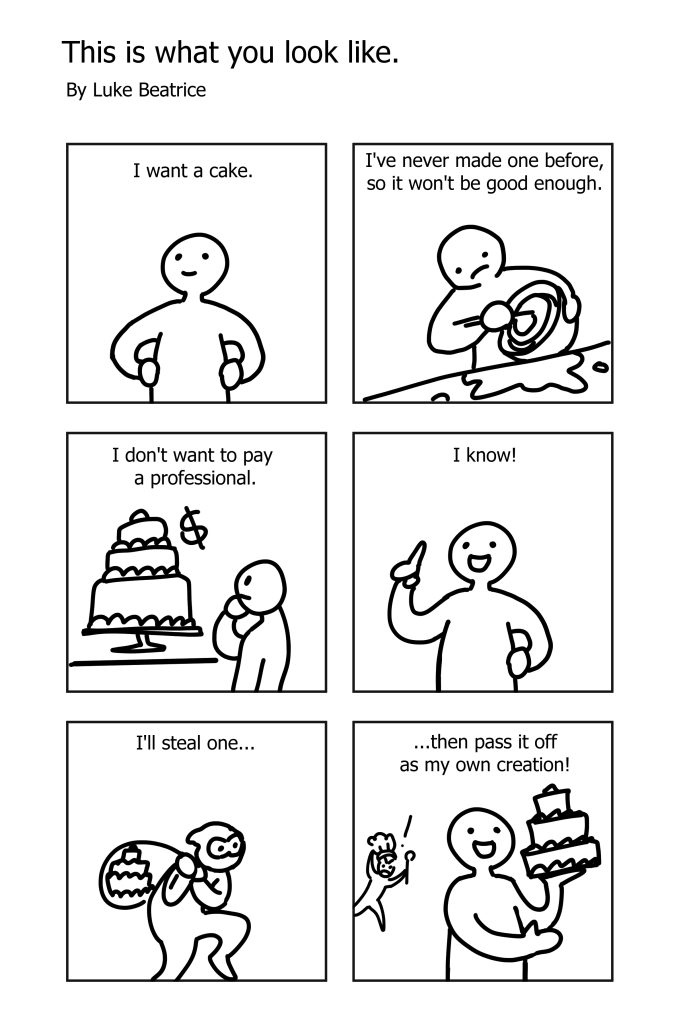
Generative artificial intelligence (GenAI) is a subfield of artificial intelligence (AI) that generates text, images, videos, audio, or other forms of data, drawing from a bank of pre-existing materials. This bank consists entirely of original works by human authors, artists, musicians, and other creators taken without their consent and with no compensation.
***Note: “AI” is a term used to cover a myriad of technologies, some of which do a lot of good (usually in medical science). It’s important to know the difference between GenAI and other kinds of AI.
More info
These works were originally taken under an exception in U.S. copyright law, which states it is legal to use material you do not own for “non-commercial teaching.” (NY Times) These GenAI products are now commercial, and therefore the companies that own them benefit financially from this theft. Still, automated bots are constantly scraping information from the internet to further train GenAI programs. (Ramezan)
Lawsuits and other legal issues are ongoing. The supreme court has dismissed claims from those attempting to copyright GenAI works, stating that a GenAI image is “ineligible for copyright protection because it does not have a human creator.” (Brittain)
Its purpose is to “allow the wealthy to access skill while removing from the skilled the ability to access wealth.” – Joseph Browning
“I found a lot of my work… almost every artist I know… was in those datasets.” – Kaya Ortiz
“I… came across images that weren’t mine, but were signed by my name.” – Greg Rutkowski
“My artwork is in the datasets used to train these image generators without my consent. I get zero compensation for this, even though these image generators cost money to use, and are a commercial product.” – Loishh
What is the difference between GenAI and digital art?
While they both require a computer and screen to access, that’s where the similarity ends. If the camera is a digital corollary for the human eye, then digital art is a corollary for paper and pencil. GenAI is a digital corollary for the artists themselves. (A human author might use a Word or Pages document as a digital way to write, but using AI to write removes the human intelligence from the project.)
GenAI is a text-based process. The user types in words and phrases called a “prompt” and the AI generates a “finished” image. The user will sometimes request changes also by typing text. Conversely, human digital artists can still make art with anything that makes a mark. Like all forms of art, digital art is a line-and-shape-based process, involving the active movement of the artist’s “hand” (or mouth, or arm, or foot, etc.).
More info
Using GenAI vs. making human art (digital or not) have opposite effects on brain function. Neuroscientists have found that making human art activates the reward pathway in the brain, lowers stress and anxiety, induces a “flow” state which focuses attention, and found “no differences in health outcomes between people who identify as experienced artists and people who don’t.” (Gharib) Meanwhile using GenAI contributes to “cognitive atrophy and shrinking of critical thinking abilities.” (Mineo)
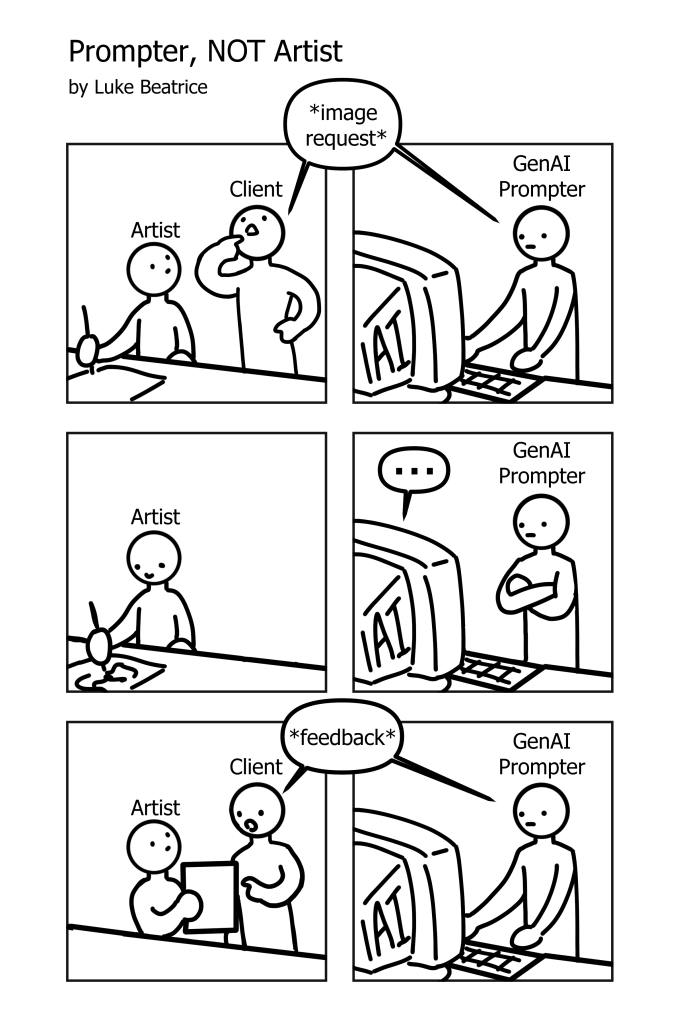
Clients who commission artists experience a similar process to GenAI users. That is, they send a written request to the “artist” who then responds with an image. They then provide feedback, and the “artist” produces an updated image. A client claiming the art as their own would be false. This is how a GenAI prompter looks to those familiar with the client/artist relationship.
“If I could say it in words there would be no reason to paint.” – Edward Hopper
Why do artists use digital art instead of traditional materials? Because it’s easy?
(This question may seem entirely unrelated to GenAI, but it’s important because it demonstrates how GenAI is not the “next step” or a “natural progression” in the evolution of art-making “tools.”)
We DON’T use digital art because it’s “easy” or “fast.” It’s not. Every medium has its upsides and downsides. Watercolor can be hard to control, but creates beautiful cloudy textures. It’s difficult to mix colors with acrylic because the dried result is often different from the wet paint. Graphite pencils are versatile when it comes to value, line weight, and texture, but it’s hard to get bright colors that blend well together.
Here are a few upsides and downsides of digital art:
+ Replicability. In the era of materialism, capitalism, and social media, it is important to be able to spread one piece of art across the internet, print it on multiple physical goods, and sometimes publish multiple iterations (such as color alternatives).
+ Editing. Clients can ask for big changes, like altering the color of the sky or moving a figure from one side of an illustration to the other. With traditional media, most of these changes are impossible without completely starting over.
– Flatness. It brings no life or texture of its own unlike pastel or watercolor. An “ammature” digital painting tends to be more obviously “ammature” than an “ammature” watercolor painting.
– Brightness. The appearance of colors and values can change depending on what monitor the art is viewed on. It can also appear much darker in print without the light of the screen.
– Unintuitive. Drawing on smooth glass can make it harder to control your line. Some technology like paper-texture screen-covers and soft-nib styluses can help with this.
Is it okay to use GenAI if it’s “only” for reference or ideas?
There is no ethical way to use generative AI as it currently stands. If you are getting any value from the imagery, text, or audio it generates, then you owe the humans providing that value compensation. They get none from GenAI.
There are other resources available, such as stock photos, figure-drawing social media accounts, or even just a web search. You could go out and take photos, using friends and family or yourself in the mirror as human model references.
- Some resources:
- Angle References: https://angleref.com/
- Stock Photos: https://www.istockphoto.com/ & https://www.gettyimages.com/ & https://www.alamy.com/ & https://www.pexels.com & https://unsplash.com/ & https://morguefile.com/ & https://www.vishopper.com/
- Animals: https://www.animal-photo-references.com
- Photos & Art: https://archive.org/
- 3D Model Library: https://www.thebasemesh.com/
- 3D Room Planner: https://roomstyler.com/3dplanner
- Smithsonian Open Access: https://www.si.edu/openaccess
- Film Screen Shots: https://film-grab.com/
- More: https://doodlemancy.dreamwidth.org/20757.html
Sources
What is Generative AI?
Brittain, Blake. “US Supreme Court Declines to Hear Dispute over Copyrights for AI-Generated Material.” Reuters, 2 Mar. 2026, www.reuters.com/legal/government/us-supreme-court-declines-hear-dispute-over-copyrights-ai-generated-material-2026-03-02/.
Browning, Joseph. “Church of Jeff (@Jeffowski@Mastodon.world).” Mastodon, 14 July 2024, mastodon.world/@jeffowski/112782711430862267.
Ortiz, Karla. “US. Senate Judiciary Subcommittee on Intellectual Property “AI and Copyright.”” Judiciary.Senate.Gov, 5 July 2023, www.judiciary.senate.gov/imo/media/doc/2023-07-12_pm_-_testimony_-_ortiz.
Ramezan, Christopher. “AI Tools Collect and Store Data about You from All Your Devices. Be Aware of What You’re Revealing. • Kansas Reflector.” Kansas Reflector, 14 June 2025, kansasreflector.com/2025/06/14/ai-tools-collect-and-store-data-about-you-from-all-your-devices-be-aware-of-what-youre-revealing/.
NY Times. “Using Copyrighted Material for Educational Purposes.” NYTLicensing, nytlicensing.com/latest/methods/using-copyrighted-material-educational-purposes/.
What is the difference between GenAI and digital art?
Gharib, Malaka. “Feeling Artsy? Here’s How Making Art Helps Your Brain.” Npr.org, NPR, 11 Jan. 2020, www.npr.org/sections/health-shots/2020/01/11/795010044/feeling-artsy-heres-how-making-art-helps-your-brain.
Mineo, Liz. “Is AI Dulling Our Minds?” Harvard Gazette, 13 Nov. 2025, news.harvard.edu/gazette/story/2025/11/is-ai-dulling-our-minds/.
Common Arguments
GenAI “democratizes” art!
No, it does not. You cannot democratize an ancient skill that anyone is capable of learning. Art already is democratized.
You have always had complete, unimpeded, free access to YOUR art. You do NOT have complete, unimpeded, free access to the art and skill of anyone else, including a decades-long professional who has studied millennia of human practice.
It is important to remember that the servers that run and produce generative AI are all corporate owned. Billionaires are the ones benefitting.
“Imitation is the sincerest form of flattery that mediocrity can pay to greatness.” – Oscar Wilde
GenAI helps people with disabilities make art!
Frida Kahlo, Beethoven, and Vincent Van Gogh disagree. (Pepper) (Cabrera) (Van Gogh Museum) It is insulting to assume disabled and neurodivergent people cannot make art without the help of AI. In fact, art is a uniquely viable career for disabled and neurodivergent people who are now at risk of losing work, income, and healthcare.
“As I am obliged to remain in bed because of my health, I made a little garden around me where I can walk… And I have found myself in the work.” – Henry Matisse
Artists against GenAI are just upset that they’re not rich!
Artists aren’t inherently greedy – tech billionaires are, though.
Most creative workers are freelancers, part-timers, and wage laborers. We are among the lowest paid professions in the U.S. alongside fast-food cooks, dishwashers, and housecleaners. (National Women’s Law Center) Artists are often TOO willing to work for cheap or for free and have to learn how to value themselves. At the same time, we need to feed and clothe and shelter ourselves and our families.
“Life beats down and crushes the soul and art reminds you that you have one.” – Stella Adler
More Info
It has been proven that, if artists have just what they need to survive, the whole community benefits. Ireland implemented a plan that would pay 2,000 artists the equivalent of $385 per week for three years. (Ronald) They found that, for every 1 euro invested, their society received the equivalent of 1.39 euro in economic and social benefits back. They reported that “a more vibrant arts sector brought myriad benefits such as greater economic activity, improved mental wellbeing, critical thinking and innovation.” (Carroll) If you find any value in the work that artists do, show them some thanks. If you don’t find value, then don’t use their work. It’s that simple!
Everyone knows that if you want to become rich, you don’t become an artist. GenAI company CEOs are the ones becoming ultra, extra rich. (See “Other ethical concerns?” below)
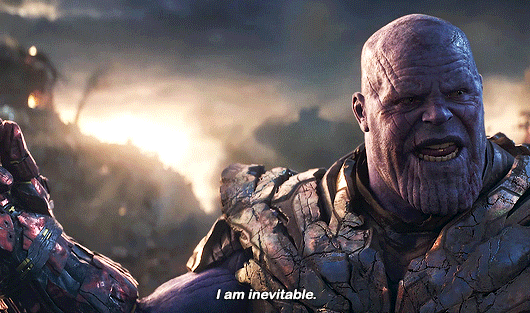
AI is inevitable. Shouldn’t we use it so we don’t fall behind?
This kind of dogmatic or fear-mongering language is actually a sales pitch in disguise. “It’s in the interest of people producing the technology to make us think that its possibilities are limitless and that it will usher in a wonderful new future for everyone. We should be cautious before we too enthusiastically pin our hopes on the latest technological trend.” (Behrends, The Harvard Gazette)
Will you fall behind if you rely on GenAI? More likely the opposite. GenAI use has been associated with a decrease in cognitive ability, brain engagement, and linguistic performance. An MIT study found that GenAI users had “the lowest brain engagement and consistently underperformed at neural, linguistic, and behavioral levels.” (Chow)
“It is better to be nothing than [to be] a follower of other painters. The wise man has said when one follows another one is always behind.” – Jean-Baptiste Camille Corot
More Info
Nothing is inevitable. It is worth fighting for a better world no matter how discouraging it may be at times. Like any boycott, the power is in our hands. When a new technology emerges, there is always a period of time before society fully accommodates it and creates the proper regulations. The “dot com bubble” is an example of this. (Hayes) The most recent GenAI boom started around 2022. That is imperceptible compared to 70,000 years of human art making.
P.S. You sound like a supervillain.
People are always resistant to technological advances. Just look at the camera/photography! How is this any different?
The key difference is that it’s “impossible to create tools like [Open AI’s] … chatbot ChatGPT without access to copyrighted material.” (Milmo) GenAI is fundamentally and completely theft. (See more above in “What’s the difference between GenAI and digital art?”)
Photography is not theft. (It can be used as such, however. That’s why it’s important to ask people if you can take a picture of them, and why cameras are not allowed in many museums.)
Photography and film did devalue art in that they stopped it from being the only way humans could record imagery and information that could not be conveyed with words. But photography also provided a way for imagery from our real world to be captured and shared. This is important when it comes to fighting censorship and spreading news, such as the Migrant Mother photograph taken in 1936 (Pastan), or the recordings of the horrors of the Vietnam war (Spector). This is the inverse of GenAI which is widely used to spread misinformation.
“It matters where a picture comes from. Before the days of photography and AI this wasn’t as much of an issue, but it was an issue… a photograph of a real family experiencing struggle and hardship moves us in a different way than an illustration of the same subject can, though we value both types of pictures for different reasons… Photography has given us another way to connect with the world, people, our shared reality called LIFE. Because LIFE is what’s on both sides of the lens. AI “art” has given us nothing remotely on that level.” – Chris Beatrice
Sources
GenAI helps people with disabilities make art!
Cabrera, Donato. “The Whole Story of Beethoven’s Deafness – the California Symphony.” The California Symphony, 3 Jan. 2018, http://www.californiasymphony.org/composer/beethoven/the-whole-story-of-beethovens-deafness/.
Pepper, Penny. “The Frida Effect: In Praise of Disabled Women.” Byline Times, 8 Mar. 2024, bylinetimes.com/2024/03/08/the-frida-effect-in-praise-of-disabled-women/.
Van Gogh Museum. “Vincent’s Illness and the Healing Power of Art.” Van Gogh Museum, 2023, www.vangoghmuseum.nl/en/art-and-stories/stories/vincents-illness-and-the-healing-power-of-art.
Visser, Casandra, et al. “Empowering Creativity: 10 Artists with Disabilities.” Accessibility Checker, 1 Aug. 2024, http://www.accessibilitychecker.org/blog/artists-with-disabilities/.
Artists against GenAI are just upset that they’re not rich!
Carroll, Rory. “Ireland’s Basic Income for the Arts Scheme Becomes Permanent.” The Guardian, The Guardian, 10 Feb. 2026, www.theguardian.com/world/2026/feb/10/ireland-basic-income-for-the-arts-scheme-becomes-permanent.
National Women’s Law Center. HARD WORK IS NOT ENOUGH -APPENDIX | 1. 2021, https://nwlc.org/wp-content/uploads/2020/04/%C6%92.NWLC_Reports_HardWorkNotEnough_LowPaid_2023-APPENDIX.pdf
Ronald, Issy. “Ireland Is Paying Artists a Basic Income in a Pioneering Scheme.” CNN, 12 Feb. 2026, http://www.cnn.com/2026/02/12/style/ireland-artists-basic-income-intl-scli.
AI is inevitable. Shouldn’t we use it so we don’t fall behind?
Chow, Andrew. “ChatGPT May Be Eroding Critical Thinking Skills, according to a New MIT Study.” TIME, Time, 17 June 2025, time.com/7295195/ai-chatgpt-google-learning-school/.
Hayes, Adam. “Dotcom Bubble Definition.” Investopedia, 31 May 2024, http://www.investopedia.com/terms/d/dotcom-bubble.asp.
Mineo, Liz. “Is AI Dulling Our Minds?” Harvard Gazette, 13 Nov. 2025, news.harvard.edu/gazette/story/2025/11/is-ai-dulling-our-minds/.https://time.com/7295195/ai-chatgpt-google-learning-school/
People are always resistant to technological advances. Just look at the camera/photography! How is this any different?
Beatrice, Chris. “Chris Beatrice.” Facebook.com, 27 Mar. 2023, A Lesson from Photography. Accessed 4 June 2026.
Milmo, Dan. ““Impossible” to Create AI Tools like ChatGPT without Copyrighted Material, OpenAI Says.” The Guardian, 8 Jan. 2024, www.theguardian.com/technology/2024/jan/08/ai-tools-chatgpt-copyrighted-material-openai.
Pastan, Amy. “Dorothea Lange + Migrant Mother.” Kennedy-Center.org, 5 Sept. 2019, www.kennedy-center.org/education/resources-for-educators/classroom-resources/media-and-interactives/media/media-arts/dorothea-lange-migrant–mother/.
Spector, Ronald H. “Vietnam War and the Media | History, Walter Cronkite, Photographers, & Facts.” Encyclopedia Britannica, 27 Apr. 2016, http://www.britannica.com/event/The-Vietnam-War-and-the-media-2051426.
ethical concerns
What is the impact of GenAI on the environment?
Negative, due to energy use and construction costs. While energy use in general is getting more efficient gradually over time, AI data centers require such a significant amount that they’re outpacing the progress of efficiency. (O’Donnell and Crownhart)
More Info
What do they use the energy and water for?
- Power is needed for the servers consuming data to train the GenAI, and for the GenAI to output responses. Both processes also lead to fossil fuel emissions. (Yañez-Barnuevo)
- Clean, fresh water is required to keep these server facilities cool. (Yañez-Barnuevo)
- The fast-tracked construction of these facilities causes deforestation, air quality degradation, constant noise pollution, and decline in public health for nearby communities. The decline in drinking water in these areas has been catastrophic as of late. (RepAOC)
Some statistics
- Data centers in the U.S. used around 200 terawatt-hours of electricity in 2024, roughly what it takes to power Thailand for a year. 4.4% of all the energy in the US now goes toward data centers. It is predicted that by 2028, AI alone could consume as much electricity annually as 22% of all US households. (O’Donnell and Crownhart)
- To compensate for exponential growth, data centers are reverting towards dirtier more carbon-intensive forms of energy, like gas. The carbon intensity of electricity used by data centers was 48% higher than the US average. (O’Donnell and Crownhart)
- The deals that utility companies make with the data centers will likely transfer the costs of AI revolution to American citizens in the form of higher electricity bills. (O’Donnell and Crownhart) 7 in 10 Americans oppose data center construction where they live. (Jones)
- Data centers can use up to 5 million gallons of fresh, clean water per day or 1.8 billion annually, however fewer than one third of data center operators track their water consumption at all. (Yañez-Barnuevo)
Are there other ethical concerns?
“They generate text with terrible stereotypes from centuries ago, like calling speakers of African American English dirty, stupid, or lazy,” – Dan Jurafsky, professor of linguistics and computer science at Stanford University
Perpetuating racial inequality. For example, when used in decision-making systems for employment, academic assessment, and legal accountability, it is more likely to give African Americans low prestige jobs, convict them of a crime, and sentence them to death. (Miller)
Political bias. For example, OpenAI is pursuing legal immunity from being sued over critical harms such as death or serious injury, property damage, or the development of weapons. (Tolomia) OpenAI is one of Trump’s largest donors. (Zeff)
Worker exploitation. For example, OpenAI hired workers from Kenya to filter out harmful ChatGPT responses. They paid them $1.50 to $3.75 per hour to review huge amounts of potentially traumatizing information and media. (Heqimi)
The generational wage gap. Job postings for entry-level positions have fallen 35% since 2023. 67% of Gen Z struggles to cover housing costs. 1 in 3 adults under 35, a record number, are living with their parents to save money (Revelio Labs).
Worse job market overall. Tech companies in the U.S. have laid off around 180,000 employees in the past 18 months and that number is growing. Many of these layoffs cite AI making workflows more “efficient” as one of the reasons they are occurring (Duarte) (Huang). In addition, workers using AI have been shown to work longer, more grueling hours (Ranganathan and Ye).
Encouraging and teaching violence. Chat GPT especially has been known to assist in suicides, shootings, and other violent acts. Despite the company’s awareness of this activity, the warning signs go unknown until it’s too late. This has resulted in numerous law suits against OpenAI. (Trigger warning, of course) You can read about one of the better-known most recent incidents here.
Can GenAI be used for good?
In the way it currently exists? No.
The environmental impact is too devastating. It functions only by relying on an incomprehensible amount of stolen information. It is steeped in the bias of those who created it, which are almost 100% older cis-het white billionaire American males. It was not created with the intention to help anyone but the people behind it make more money.
***Note: “AI” is a term used to cover a myriad of technologies, some of which do a lot of good (usually in medical science). It’s important to know the difference between GenAI and other kinds of AI.
Sources
What is the impact of GenAI on the environment?
Jones, Jeffrey M. “Americans Oppose AI Data Centers in Their Area.” Gallup.com, Gallup, 13 May 2026, news.gallup.com/poll/709772/americans-oppose-data-centers-area.aspx.
O’Donnell, James, and Casey Crownhart. “We Did the Math on AI’s Energy Footprint. Here’s the Story You Haven’t Heard.” MIT Technology Review, 20 May 2025, www.technologyreview.com/2025/05/20/1116327/ai-energy-usage-climate-footprint-big-tech/.
RepAOC. “Rep. AOC Presses EPA Assistant Admin Kramer on Jeopardizing Clean Water by Caving to Data Centers.” YouTube, 20 May 2026, http://www.youtube.com/watch?v=rOQ-vH5fAk8.
Yañez-Barnuevo , Miguel. “Communities Are Raising Noise Pollution Concerns about Data Centers | Article | EESI.” Eesi.org, Environmental and Energy Study Institute, 2026, www.eesi.org/articles/view/communities-are-raising-noise-pollution-concernsabout-data-centers.
Yañez-Barnuevo, Miguel. “Data Centers and Water Consumption | Article | EESI.” Eesi.org, 25 June 2025, http://www.eesi.org/articles/view/data-centers-and-water-consumption.
Are there other ethical concerns?
Duarte, Fabio. “List of Companies Announcing AI-Driven Layoffs – Programs.com.” Programs.com, 19 Dec. 2025, programs.com/resources/ai-layoffs/.
Heqimi, Anna. “Welcome to Zscaler Directory Authentication.” Uconn.edu, 2026, today.uconn.edu/2026/03/the-ethical-and-environmental-consequences-of-generative-ai/.
Huang, Kalley. “Is A.I. Replacing Tech Workers or Providing an Excuse for Job Cuts?” The New York Times, 1 June 2026, http://www.nytimes.com/2026/06/01/technology/ai-tech-job-cuts.html.
Labs, Revelio. “Entry-Level Job Postings Are Down 35%.” Revelio Labs, 2026, https://www.reveliolabs.com/blog/fast-company-entry-level-hiring. Accessed 30 Sept. 2026.
Miller, Katharine. “Covert Racism in AI: How Language Models Are Reinforcing Outdated Stereotypes.” Stanford HAI, Stanford University, 3 Sept. 2024, hai.stanford.edu/news/covert-racism-ai-how-language-models-are-reinforcing-outdated-stereotypes.
Ranganathan, Aruna, and Xingqi Maggie Ye. “AI Doesn’t Reduce Work—It Intensifies It.” Harvard Business Review, 9 Feb. 2026, https://hbr.org/2026/02/ai-doesnt-reduce-work-it-intensifies-it. Accessed 30 Sept. 2026.
Tolomia, Cris. “OpenAI Backs Illinois Bill to Shield AI Firms from Harm Lawsuits.” Quartz, 10 Apr. 2026, qz.com/openai-illinois-bill-ai-liability-critical-harm-041026.
Zeff, Maxwell. “OpenAI’s President Gave Millions to Trump. He Says It’s for Humanity.” WIRED, 12 Feb. 2026, http://www.wired.com/story/openai-president-greg-brockman-political-donations-trump-humanity/.
Can GenAI be used for good?
Fromson, Noah. “An AI Model That Can Read and Diagnose a Brain MRI in Seconds.” Michiganmedicine.org, 6 Feb. 2026, http://www.michiganmedicine.org/health-lab/ai-model-can-read-and-diagnose-brain-mri-seconds.
what should i do if…
I can’t afford a human artist?
Most artists aren’t as costly as you think. Many are willing to work for free, low-cost, trades, exposure, etc. especially if you are a non-profit, charity, small business, or local organization.
You can find artists in many ways:
- Reddit https://www.reddit.com/r/artistforhire/
- Behance https://www.behance.net/hire?locale=en_US
- Fiver https://pro.fiverr.com/
- Upwork https://www.upwork.com/hire/graphic-designers/
- Make a post and have us come to you https://www.instagram.com/popular/looking-for-artist/
- Find local craft fairs or conventions and meet artists in person https://www.eventbrite.com/https://fancons.com/
Use pre-existing assets like clipart or stock images. If you ask, many artists will be fine with lending their art if you provide them credit, especially for non-commercial projects/uses.
- Clipart https://clipart.com/
- Stock photos https://www.istockphoto.com/
Try making your own art or assets with your own brain, eyes, and hands. We have more (non GenAI) resources than ever before. (“Can’t even draw a stick figure?” Check out the next question.) Some drawing and graphic design resources:
- Inkscape https://inkscape.org/
- Canva (look out for art assets that were made with AI)
- Word, Powerpoint, and comparable software https://www.instantprint.co.uk/printspiration/print-design-tips/how-to-make-a-poster-in-word
- YouTube https://www.youtube.com/results?search_query=art+tutorials
- Instagram https://www.instagram.com/explore/search/keyword/?q=art%20tutorials&hl=en
- Use traditional media, then photograph or scan it for online publishing. Crazy, right?
If these options aren’t adequate, then think: do you really need this imagery? Would black text on a white background suffice?
You never need to use GenAI. It is always a choice.
Reach out to me, LukeBeatriceArt@gmail.com for inquiries. I have personally made art in exchange for: (1) as little as $5, (2) cookies, (3) a discounted ticket to an event, (4) a free table at a convention to sell my work, (5) percentage/stakes in a project/company, (6) deferred payment, (7) college credit, (8) trade with another artist, (9) exposure/to build my portfolio, (10) a letter of recommendation, (11) completely free no strings attached (especially for charities and non-profits)
“If people knew how hard I had to work to gain my mastery, it would not seem so wonderful at all.” – Michelangelo
I can’t even draw a stick figure? I don’t have artistic “talent.”
Art is hard work. It takes practice. You can’t speak fluent French after learning for an hour, you can’t run a marathon after training for one day, you can’t become a proficient artist without thousands of hours of practice.
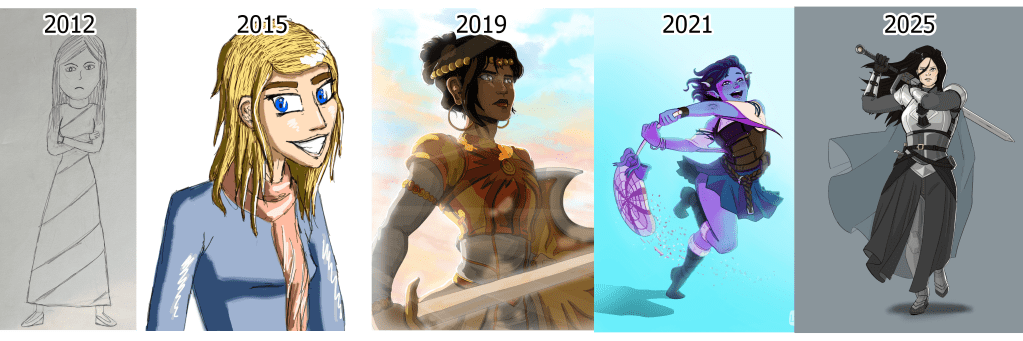
More and more artists are sharing their first works to show just how far they’ve come. See more examples on Reddit and Instagram.
If you don’t want to invest all these hours, that’s understandable! The point of human society is that we can benefit from each other’s mastery… because we compensate each other for our skills. If you want art, you have to work for it or pay for it. That being said, artists are among the most generous demographic when it comes to pricing their work or helping others learn to make their own. (See “I can’t afford a human artist” for more resources)
“If you hear a voice within you say, ‘You cannot paint,’ then by all means paint, and that voice will be silenced” – Vincent Van Gogh
I can’t tell the difference between GenAI and human art?
Some artists can identify an AI image just with a quick glance. Art is a language and, for those who can speak it fluently, it can be immediately obvious to spot an imposter.
For those who can’t do this, there are other strategies:
- Look for places of detail or patterning, like hair, fur, grass, leaves, baskets, knitting, etc. Oftentimes you will find errors here.
- Look for anatomical errors, like extra limbs or missing limbs. GenAI is famous for making humans with six fingers.
- Look at what the piece depicts. GenAI images usually have simple ideas that are easily described in words (for example, “woman with cat ears in a tavern”). They are also more likely to depict trope-ishly attractive people in a very cisgender-heterosexual-white-anglosaxon-fatphobic way.
- Examine the context of the piece. If you find the image’s source, the creator will likely be proud to share that it was made with AI, or adamant to establish that it is not.
- AI image detectors: https://www.zerogpt.com/ai-image-detector & https://wasitai.com/ & https://deepai.org/ai-image-detector
- Others have their own strategies: https://roblaughter.medium.com/is-that-image-ai-here-are-14-telltale-signs-to-look-for-d40e5cff2d0a & https://www.belltreeforums.com/threads/is-this-ai-a-comprehensive-guide-to-spotting-ai-art.634856/
Remember: Human art doesn’t look like GenAI. That’s like saying a parent looks like their child. GenAI copies human art, and that is where the similarities come from.
I want to help? What can I do?
Don’t use GenAI. You never need to use it.
Accidentally used it? Take it down. Already printed/posted it? Take it down.
Educate others. Many kind, well-meaning people have no idea of the impacts.
Pressure elected representatives to take action, institute laws, or follow up on the laws already there that GenAI blatantly violates.
have thoughts?
Do you have resources or information you’d like to add? Evidence that disproves any information on this page? Looking for help with creating art assets? Reach out to humanmindshumanhands@gmail.com

